
City’s Proposes Multi-Lane Roundabout in Midtown
A single lane roundabout would better serving all users and increase traffic capacity
What the city has in mind:
The 2020 GO Bond budgeted for a single-lane roundabout at 8th and Olney - a win for all road users and neighbors.
The city’s shift to favor a multi-lane configuration introduces more dangerous ‘double threat’ crossings to Midtown and encourages more thru-traffic, higher speeds and road noise in the center of one of Bend’s most diverse and complete neighborhoods.
Midtown Moves envisions something different:
an intersection designed more like Galveston & 14th than Reed Market & 15th—one that increases traffic capacity while strengthening, rather than dividing, the neighborhood.
A single lane roundabout option has not been presented to City Council for consideration. It deserves a look.
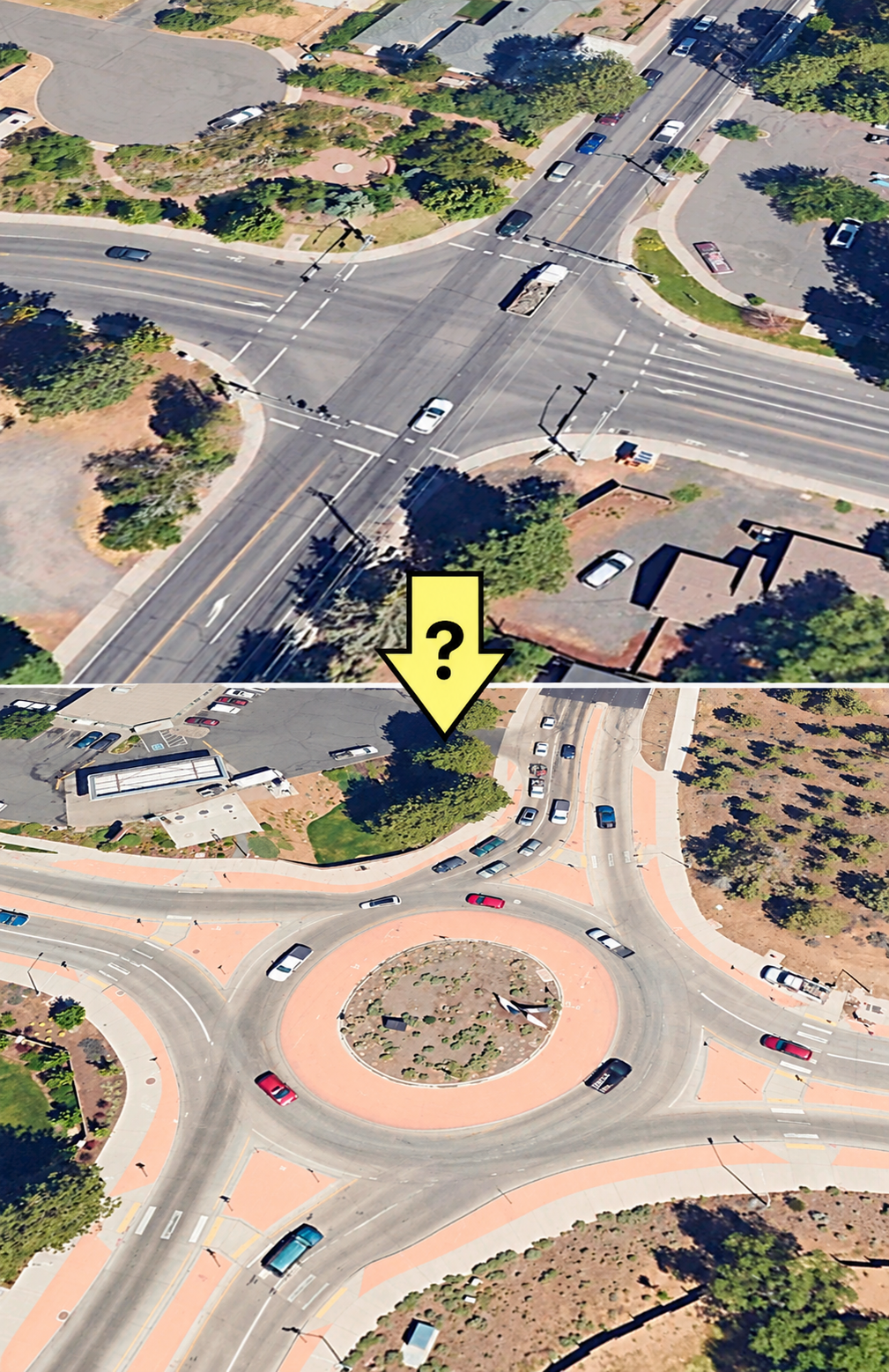
Preliminary designs for the NE 8th & Olney intersection (above) will not be available until the open house on October 8th. The Reed Market & SW 15th roundabout is larger in footprint but contains similar lane assignments to what is being proposed at 8th and Olney - a ‘partial double lane.’
Multi-Lane Roundabouts Create “Double-Threat” Crossings
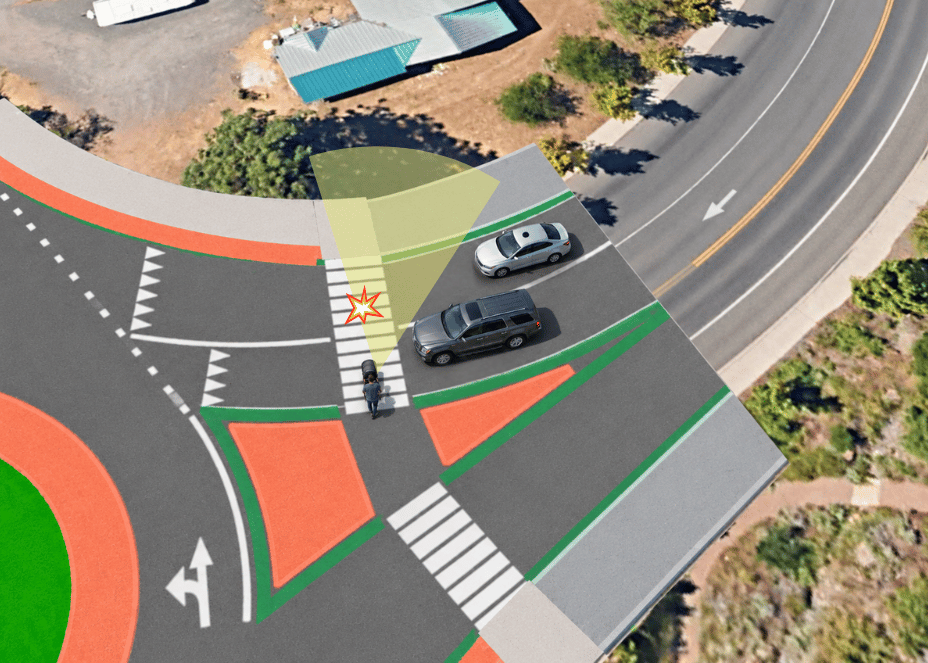
Two lanes create a hidden threat. When one vehicle stops for someone in the crosswalk, it blocks the view between that person and a driver approaching in the second lane. Speed and distraction make the problem worse. The proposed design for 8th & Olney would introduce multiple crossings with this geometry.
What is a “double-threat” crossing?
A double-threat occurs when someone must cross two lanes of traffic traveling in the same direction. A driver in the first lane stops for the person crossing—but that stopped vehicle can block the view of a driver approaching in the second lane.
The result is a simple but serious problem:
The driver can’t see the person.
The person can’t see the driver.
We already have crossings like this on Greenwood. Even with rapid-flashing warning lights, there have been multiple instances of neighbors being struck at these crossings.
The problem is visibility
Imagine a large pickup or SUV stopped at the crosswalk. For a driver approaching in the adjacent lane, a person directly in front of that vehicle can be completely hidden.
If that obstruction were permanent, we would recognize the sightline problem immediately. But at a double-threat crossing, the obstruction appears precisely when someone is trying to cross the street.
Sometimes everyone reacts in time and the result is only a frightening close call.
But those close calls matter, too. They teach people—especially children, older adults, and less-confident users—that walking or biking through the neighborhood is unsafe. That pushes more everyday trips into cars and adds to the very traffic we're trying to manage.
We can design this problem out
If Bend is serious about reducing serious crashes and making walking and biking a realistic choice, we should be working to eliminate double-threat crossings—not building new ones.
Let’s get 8th & Olney right while we still have the opportunity.
A City Arterial. A Neighborhood Street.
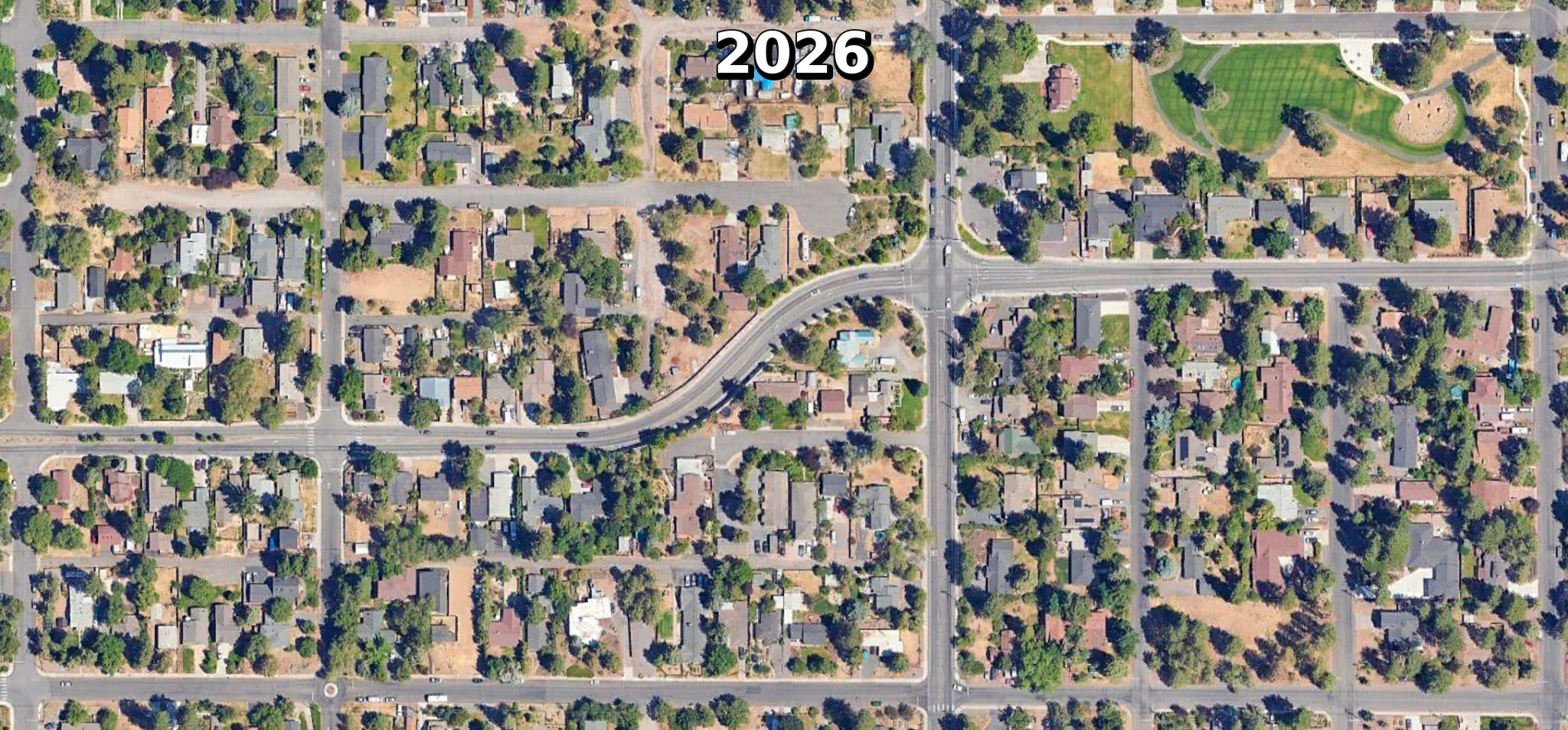
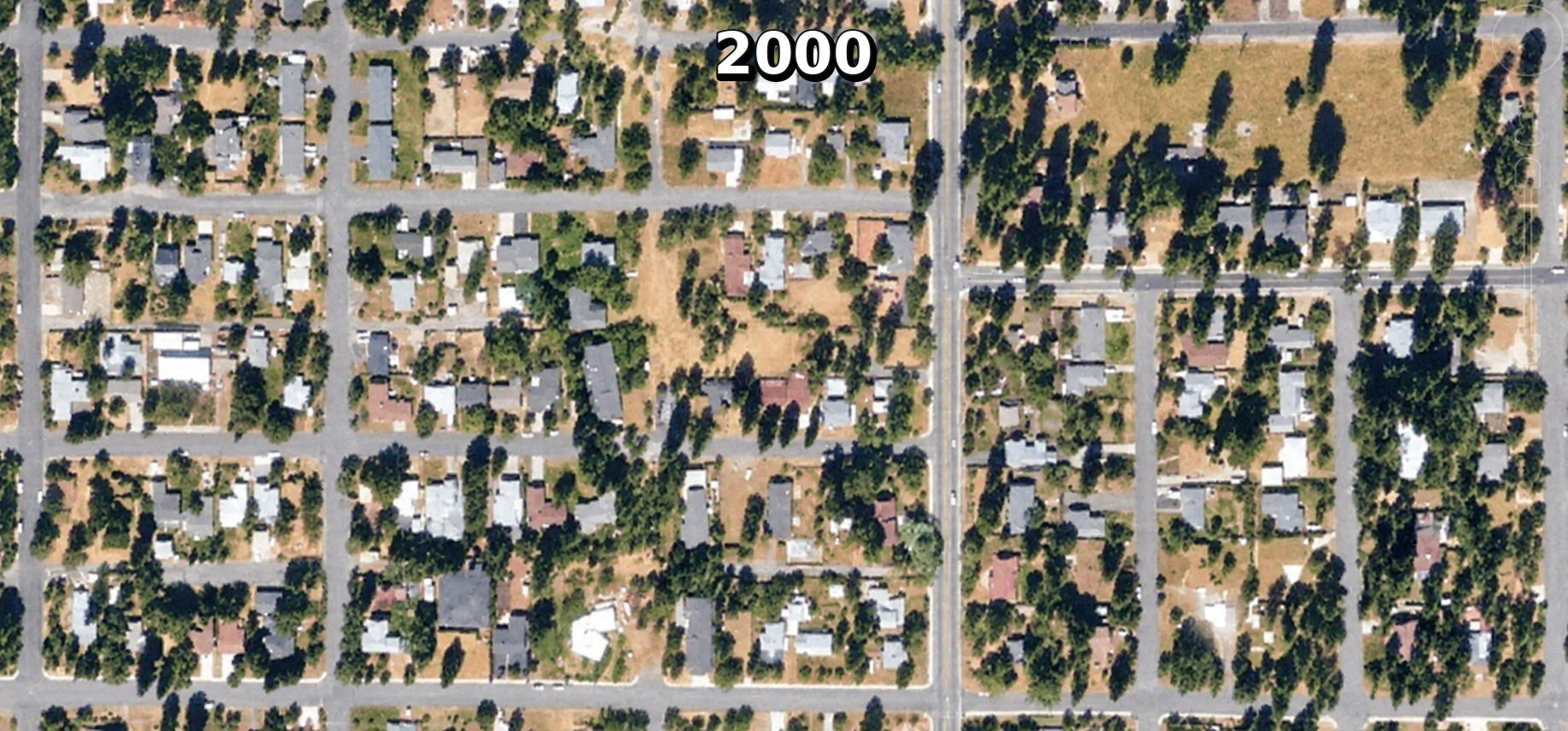
Twenty-six years ago, NE Olney was a quiet residential street. Its connections to Portland Avenue and Penn Avenue transformed it into a major east–west route, replacing homes with a curved roadway and what is now Laurel Pocket Park.
The original redesign recognized the street's dual purpose. To this day, landscaped medians, street trees, and speed humps help manage traffic speeds on NE Olney while preserving a more welcoming neighborhood environment.
That same principle should guide the proposed intersection improvements at NE 8th and Olney. Midtown Moves supports a single-lane roundabout that can accommodate current traffic volumes and significant future growth. Excess roadway capacity can encourage higher speeds and, over time, more driving.
Streets shape neighborhoods, not just traffic patterns. The walkable commercial districts along Galveston and Newport demonstrate the value of human-scale streets. The City is currently exploring improvements to its neighborhood commercial code to help build more complete communities. NE 8th has similar potential for neighborhood businesses, but a multi-lane roundabout could make the area less inviting for pedestrians and discourage the kind of street-level activity needed to support a vibrant Midtown.
Regional mobility matters. So does the neighborhood the road passes through. This intersection design should serve both.
Let’s Plan Together
Interested in helping us promote more balanced transportation solutions for Midtown? have a question? Please reach out.